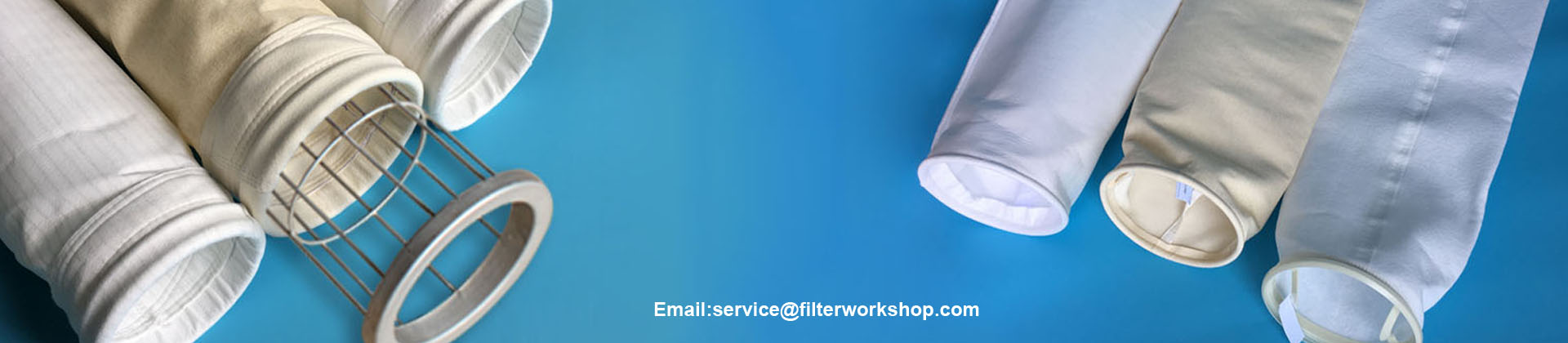
INDRO Filter Elements vs Conventional Filters — Key Technical Advantages
Views : 877
Author : filterworkshop.com
Update time : 2026-02-24 13:26:24
INDRO Filter Elements vs Conventional Filters — Key Technical Advantages
In today’s filtration industry, choosing the right filter element is crucial for performance, longevity, and cost-effectiveness. As industrial processes become more demanding and standards for purity and contamination control tighten, conventional filters are increasingly exposed for their technical limitations. This has driven innovation toward advanced solutions like INDRO filter elements, which outperform traditional filter technologies across multiple key parameters. This article explores the technical advantages of INDRO filter elements compared with conventional filters. We’ll dive into material science, design optimization, fluid dynamics, manufacturing precision, and performance metrics to demonstrate why INDRO filter elements are rapidly becoming the preferred choice in high-end industrial filtration applications.
1. Material Innovation: Engineered for Superior Filtration
The core of any filter’s performance lies in its media. INDRO filter elements utilize engineered media structures that deliver a significant edge over conventional filter materials. High-Efficiency Media Structure
Conventional filters typically use standard depth or fibrous media with limited surface area and inconsistent pore distribution. In contrast, INDRO media is designed with controlled porosity and gradient density:
Higher contaminant holding capacity due to optimized pore gradients.
Uniform particle capture at micron levels with less bypass.
Reduced pressure drop even with higher throughput demands.
These engineered attributes result in much higher filtration efficiency, especially for critical applications such as pharmaceutical processing, microelectronics, food & beverage, and chemical refining. Enhanced Durability and Chemical Resistance
Traditional filters often fail under aggressive chemical environments or elevated temperatures because of inferior media selection. INDRO elements are constructed from high-performance polymers and composite blends that resist degradation, swelling, and structural breakdown in harsh conditions.
This translates into:
Longer service life
Reduced frequency of filter changeouts
Improved operational uptime
2. Design Engineering: Maximizing Surface Area and Flow Efficiency
A standout advantage of INDRO filter elements over conventional filters is the intelligent design that maximizes surface utilization and fluid flow. Pleated Construction vs. Basic Cylinder Design
Conventional filters are usually cylindrical or flat with limited surface area, which restricts performance at higher flow rates. INDRO filter elements, however, often feature pleated designs that:
Expand surface area dramatically within the same volume.
Allow higher flow capacity without compromising efficiency.
Reduce overall energy consumption due to lower resistance to flow.
Pleated design also helps maintain stable differential pressure levels, minimizing stress on pumps and other system components. Optimized Flow Dynamics
INDRO filter elements are engineered with fluid dynamic modeling to:
Promote laminar flow across media.
Reduce turbulence and backpressures.
Improve throughput in both liquid and gas filtration environments.
This technical advantage significantly improves system performance, especially in high-speed industrial processes.
3. Precision Manufacturing: Consistency and Quality Control
The reliability of a filter is only as good as its manufacturing precision. While conventional filters are often fabricated using traditional winding or non-woven techniques with wide tolerances, INDRO filter elements are produced with state-of-the-art manufacturing systems that ensure consistent quality and performance. Automated Production and Quality Monitoring
Advanced robotic assembly lines and real-time monitoring systems provide:
Tight tolerances and reproducible element properties.
Defect-free media with fewer variations in pore size and weave.
Lower reject rates, contributing to product consistency.
Traceability and Certification
INDRO filter elements undergo rigorous testing and verification procedures. Each batch is traceable, often documented with performance metrics such as:
Beta ratio test results
Particle efficiency curves
Flow vs. pressure drop measurements
This level of quality control is rarely matched in conventional filter production and ensures predictable performance in mission-critical applications.
4. Filter Life and Lifecycle Cost Savings
A central metric for comparing filters is total lifecycle cost, rather than just upfront price. INDRO filter elements provide significant cost advantages over conventional filters because of their long life and stable performance. Lower Replacement Frequency
Thanks to enhanced media capacity and durability, INDRO elements can last significantly longer than conventional filters. This means:
Fewer filter changeouts
Reduced downtime for maintenance
Lower labor and inventory expenses
For high-volume systems, these savings can be substantial over the life of the equipment. Improved Operational Efficiency
With INDRO elements, systems maintain consistent pressure and flow characteristics over a longer period, which improves:
Energy efficiency of pumps and blowers
Product yield and quality consistency
Predictability in maintenance planning
This predictability also helps organizations reduce unplanned outages and extend the life of other system components.
5. Customization and Application Flexibility
Not all filtration challenges are the same. One key advantage that INDRO filter elements have over conventional options is customizability for specific industrial needs. Tailored Filter Specifications
INDRO’s modular and engineered approach allows customization of:
Micron ratings
Media type (cellulose, synthetic, PTFE, etc.)
Shell and end-cap materials
Sealing options
This level of customization ensures that filtration is optimized for the process conditions, whether in:
Water treatment
Chemical production
Food & beverage processing
Oil & gas filtration
Conventional filters usually come in standard sizes and media options, offering far less adaptability. Integration With Advanced Filtration Systems
INDRO elements are designed to integrate seamlessly with automated filtration systems, including:
Real-time monitoring systems
Self-cleaning filters
High-temperature assemblies
High-precision gas filtration setups
This enables facilities to build more advanced and automated filtration networks compared to conventional setups that may require more manual intervention.
6. High Performance in Extreme Environments
Some environments pose challenges that conventional filters simply cannot meet. Temperature extremes, corrosive chemicals, and stringent purity standards can degrade typical filter media quickly. Thermal and Chemical Resistance
INDRO elements are engineered to withstand higher temperatures and corrosive environments without losing structural integrity or performance. This makes them ideal for:
Steam systems
Solvent filtration
High-temperature process fluids
In contrast, conventional filters often degrade or require frequent replacement under such conditions. Reliable Performance Under Load
With conventional filters, performance often drops rapidly as contaminant loads increase. INDRO elements maintain:
Stable differential pressure curves
High particle removal efficiency
Longer run times before reaching end-of-life thresholds
This robustness reduces the risk of process failures due to filter breakthrough or collapse.
Conclusion: The Clear Advantage of INDRO Filter Elements
When comparing INDRO filter elements with conventional filters, the technical superiority of the former becomes clear. INDRO elements deliver:
Superior material performance with engineered media structures
Intelligent design with high surface area and optimized fluid flow
Precision manufacturing for consistent and predictable results
Longer service life and lower total lifecycle cost
Customizability for specific industrial challenges
Enhanced durability and performance in extreme environments
For engineers, plant managers, and procurement professionals seeking filtration solutions that push performance boundaries while reducing long-term costs, INDRO filter elements represent a technically advanced and economically smart choice.
As manufacturing technology and process demands continue to evolve, so too should filtration strategy. In this landscape, INDRO filter elements are not just an alternative — they are the next evolution of high-performance filtration.