Dust Collector Filter Bags:Working Principles and Performance Factors
Views : 2502
Author : filterworkshop.com
Update time : 2026-01-20 15:50:30
Dust collector filter bags are the heart of industrial dust collection systems, playing a vital role in controlling particulate emissions, protecting equipment, and ensuring a safe working environment. They are widely used in industries such as cement, steel, power generation, woodworking, chemicals, and food processing. Understanding how dust collector filter bags work and what factors influence their performance is essential for achieving efficient filtration, long service life, and regulatory compliance. This article explores the working principles of dust collector filter bags and the key performance factors that determine their effectiveness. 1. What Are Dust Collector Filter Bags?
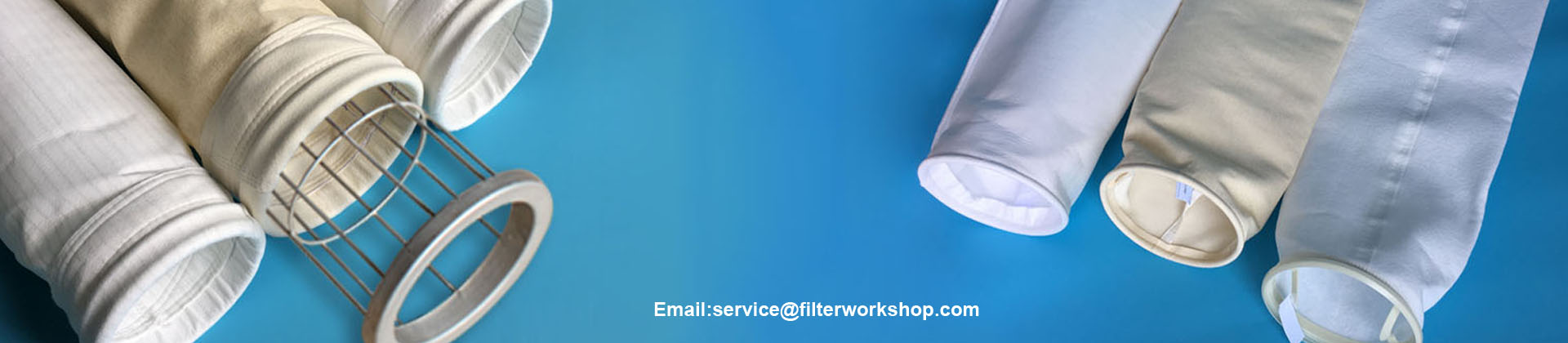
Dust collector filter bags are cylindrical or envelope-shaped textile filters installed inside baghouse dust collectors. Their primary function is to separate dust particles from process air or gas streams while allowing clean air to pass through. The captured dust forms a layer, known as a dust cake, on the surface of the filter bag, which significantly enhances filtration efficiency.
Unlike cartridge filters, filter bags are especially suited for high-temperature, high-dust-load, and large air-volume applications, making them the preferred choice in many heavy industrial processes.
2. Basic Structure of a Filter Bag
A typical dust collector filter bag consists of several components:
Filter media: The main fabric that captures dust particles
Top and bottom construction: Snap band, flange, or raw edge for mounting
Seams: Sewn or welded joints that must withstand continuous cleaning cycles
Support cage: A metal cage that prevents bag collapse under negative pressure
The quality of each component directly affects filtration performance, pressure drop, and service life.
3. Working Principles of Dust Collector Filter Bags 3.1 Filtration Mechanism
Dust-laden air enters the dust collector and is directed toward the filter bags. As air passes through the filter media:
Larger particles are captured on the surface of the bag
Finer particles are trapped within the fiber matrix
Clean air exits through the bag interior and is discharged
Over time, a dust cake forms on the bag surface. This dust cake becomes the primary filtration layer, improving particle capture efficiency, often to levels above 99.9%.
3.2 Dust Cake Formation and Its Role
While excessive dust buildup increases pressure drop, a stable dust cake is essential for efficient filtration. The key is to maintain an optimal balance:
Too little dust cake: Lower filtration efficiency
Too much dust cake: High pressure drop and reduced airflow
Effective dust collection relies on controlled dust cake formation and timely cleaning.
3.3 Cleaning Methods
To maintain airflow and extend bag life, dust collector filter bags are periodically cleaned. Common cleaning methods include:
Pulse-jet cleaning: Short bursts of compressed air dislodge dust from the bag surface
Reverse air cleaning: Low-pressure air flows in the opposite direction to remove dust
A well-designed system with appropriate filter media can achieve extremely high particle capture rates, including fine PM2.5 and PM10 particles.
5.2 Air-to-Cloth Ratio
The air-to-cloth ratio (A/C ratio) is the volume of air passing through a given area of filter media. It is one of the most critical design parameters.
Low A/C ratio: Lower pressure drop, longer bag life
High A/C ratio: Compact system but higher wear and cleaning frequency
Selecting the correct A/C ratio ensures stable operation and optimized performance.
5.3 Pressure Drop
Pressure drop across the filter bags directly impacts energy consumption. High pressure drop increases fan power requirements and operating costs.
Factors influencing pressure drop include:
Dust loading characteristics
Filter media permeability
Cleaning frequency and effectiveness
Maintaining a stable pressure drop is a key indicator of healthy system performance.
5.4 Operating Temperature
Each filter media has a maximum continuous operating temperature. Exceeding this limit can cause:
Fiber degradation
Bag shrinkage or hardening
Premature failure
Temperature spikes during process upsets must also be considered during media selection.
5.5 Chemical Compatibility
Process gases may contain acids, alkalis, or solvents that attack filter media. Proper material selection prevents chemical degradation and ensures consistent filtration performance.
6. Mechanical Factors Affecting Bag Life 6.1 Abrasion and Wear
High dust velocity, sharp particles, and poor gas distribution can cause abrasion, especially near the bag bottom and cage contact points. 6.2 Bag and Cage Fit
Incorrect bag length, diameter, or cage design can lead to:
Excessive flexing during cleaning
Uneven dust loading
Early bag failure
Proper matching of filter bags and cages is essential for long-term reliability.
7. Emission Control and Environmental Compliance
Dust collector filter bags are a primary tool for meeting environmental regulations. With the right media and system design, baghouses can achieve ultra-low emission levels that comply with stringent standards in industrialized regions.
Consistent monitoring of emissions and pressure drop helps detect issues early and ensures ongoing compliance.
8. Maintenance and Replacement Strategies
Regular inspection and planned replacement of filter bags reduce unplanned downtime. Key maintenance practices include:
Monitoring differential pressure
Checking for broken or leaking bags
Inspecting cages and seals
Proactive maintenance extends system life and maintains stable performance.
Conclusion
Dust collector filter bags are a cornerstone of industrial air pollution control systems. Their performance is governed by fundamental filtration principles, dust cake behavior, and a wide range of operational and material-related factors. By understanding how filter bags work and what influences their efficiency, plant operators and engineers can optimize system design, reduce operating costs, extend filter life, and ensure compliance with environmental regulations. Selecting the right filter media, maintaining proper operating conditions, and implementing effective cleaning and maintenance strategies are the keys to long-term, high-performance dust collection.