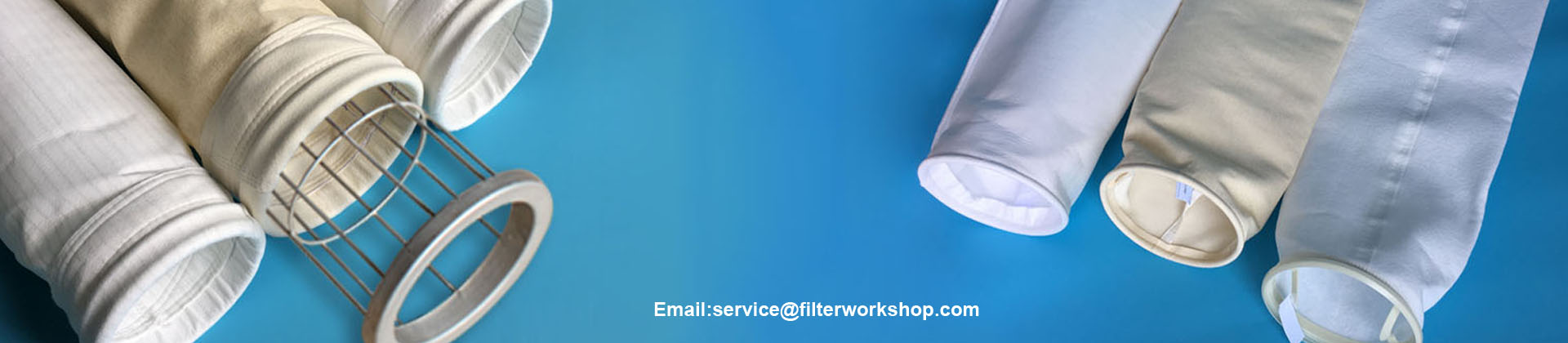
How to Choose the Right Filter Bag for Industrial Filtration Systems
News Category

How to Choose the Right Filter Bag for Industrial Filtration Systems

Views : 19
Author : filterworkshop.com
Update time : 2026-01-11 15:49:19
How to Choose the Right Filter Bag for Industrial Filtration Systems
Focus on Liquid Filtration Bags and Dust Collector Filter Bags
Industrial filtration systems play a critical role in protecting equipment, improving product quality, ensuring workplace safety, and meeting environmental regulations. At the heart of many of these systems is a seemingly simple but highly important component: the filter bag. Choosing the right filter bag is not just about fitting it into a housing or dust collector—it is about matching material, structure, efficiency, and durability to the specific process conditions.
This article provides a practical and in-depth guide on how to choose the right filter bag for industrial filtration systems, with a special focus on liquid filtration bags and dust collector filter bags. By understanding the key selection factors, engineers and plant managers can optimize performance, reduce operating costs, and extend service life.
 
1. Understanding Industrial Filter Bags
Filter bags are flexible filtration media designed to capture solid particles from liquids or gases. They are widely used across industries such as chemical processing, pharmaceuticals, food and beverage, water treatment, cement, metallurgy, power generation, and general manufacturing.
Broadly, industrial filter bags fall into two main categories:
  • Liquid filtration bags – used to remove solids from liquids
  • Dust collector filter bags – used to capture particulate matter from air or gas streams
Each type operates under very different conditions, which makes proper selection essential.
 
2. Choosing the Right Liquid Filtration Bag
2.1 Application Overview
Liquid filtration bags are commonly installed inside a filter vessel or bag filter housing. They remove contaminants such as sediment, gels, fibers, catalyst fines, or other suspended solids from liquids like water, solvents, oils, chemicals, coatings, and food products.


Typical applications include:
  • Water and wastewater treatment
  • Chemical and petrochemical processing
  • Paints, inks, and coatings
  • Food and beverage filtration
  • Electronics and semiconductor chemicals
 
2.2 Key Selection Factors for Liquid Filtration Bags
a) Filtration Rating (Micron Size)
The first and most important factor is the micron rating, which determines the size of particles the bag can capture. Liquid filtration bags are available in a wide range, typically from 1 micron to 1000 microns.
  • 1–10 microns: Fine filtration, polishing, high product quality requirements
  • 25–100 microns: General-purpose filtration
  • 200+ microns: Pre-filtration and coarse particle removal
Selecting too fine a micron rating may cause rapid clogging, while too coarse a rating may fail to protect downstream equipment.
 
b) Filter Bag Material
Material compatibility with the process fluid is critical. Common materials include:
  • Polypropylene (PP): Excellent chemical resistance, widely used for water and chemicals
  • Polyester (PE): Good strength, suitable for oils and solvents
  • Nylon (PA): High mechanical strength, abrasion-resistant
  • PTFE (Teflon): Superior chemical and temperature resistance for aggressive fluids
Always check chemical compatibility charts to avoid degradation or contamination.
 
c) Construction Type
Liquid filtration bags are typically available in two constructions:
  • Felt filter bags: Depth filtration, higher dirt-holding capacity
  • Mesh filter bags: Surface filtration, reusable, ideal for large particles
Felt bags are better for fine particles and longer service life, while mesh bags are preferred for coarse filtration and frequent cleaning.
 
d) Bag Size and Fit
Standard sizes (such as Size #1 and Size #2) are designed to fit most industrial filter vessels. Choosing the correct size ensures:
  • Proper sealing
  • No bypass leakage
  • Optimal flow rate
Incorrect sizing can lead to poor filtration efficiency and premature failure.
 
2.3 Operational Considerations
When selecting liquid filtration bags, also consider:
  • Operating temperature
  • Operating pressure
  • Flow rate and viscosity of the liquid
  • Frequency of bag change-outs
Balancing filtration efficiency with operating cost is key to long-term success.
 
3. Choosing the Right Dust Collector Filter Bag
3.1 Application Overview
Dust collector filter bags are used in industrial air filtration systems to remove solid particles from exhaust air or process gas streams.


They are essential for:
  • Protecting workers’ health
  • Preventing equipment wear
  • Meeting environmental emission standards
Common industries using dust collector filter bags include cement, steel, mining, power plants, woodworking, food processing, and chemical manufacturing.
 
3.2 Key Selection Factors for Dust Collector Filter Bags
a) Dust Characteristics
Understanding the nature of the dust is fundamental:
  • Particle size distribution
  • Abrasiveness
  • Moisture content
  • Chemical composition
  • Explosiveness
Fine, sticky, or abrasive dust requires specialized filter fabrics and surface treatments.
 
b) Filter Fabric Material
The choice of filter fabric rolls and finished filter bags directly affects performance and lifespan. Common materials include:
  • Polyester (PET): General-purpose, cost-effective
  • Polypropylene (PP): Good chemical resistance, low moisture absorption
  • Aramid (Nomex®): High-temperature resistance (up to ~200°C)
  • PPS (Ryton®): Resistant to acids and high temperatures
  • Fiberglass: Very high temperature applications
Each fabric has specific limits for temperature, chemical exposure, and mechanical strength.
 
c) Operating Temperature
Dust collector filter bags must withstand continuous and peak temperatures of the gas stream. Selecting a bag with insufficient temperature resistance can cause:
  • Fabric shrinkage
  • Loss of filtration efficiency
  • Premature failure
Always choose a fabric with a safety margin above normal operating temperature.
 
d) Surface Treatment and Finishing
Modern dust collector filter bags often include surface treatments to enhance performance:
  • PTFE membrane: Improves filtration efficiency and dust release
  • Anti-static treatment: Prevents static buildup in explosive environments
  • Oil and water repellent treatment: Reduces clogging
  • Glazing or singeing: Improves surface smoothness
These treatments significantly extend bag life and reduce maintenance.
 
e) Filter Bag Design and Dimensions
Dust collector bags must match the system design, including:
  • Diameter and length
  • Top and bottom construction (snap band, raw edge, ring top, disc bottom, etc.)
  • Compatibility with the dust collector filter cage
A properly designed filter bag works in harmony with the cage to maintain shape and ensure effective pulse-jet cleaning.
 
4. Comparing Liquid Filtration Bags and Dust Collector Filter Bags
Although both are called “filter bags,” their functions differ greatly:
Aspect Liquid Filtration Bags Dust Collector Filter Bags
Medium Liquids Air / Gas
Filtration Type Depth or surface Surface with dust cake
Key Factors Micron rating, compatibility Temperature, dust type
Housing Filter vessel Dust collector
Cleaning Disposable or washable Pulse-jet, shaker, reverse air
Understanding these differences helps avoid misapplication and ensures reliable filtration.
 
5. Common Mistakes to Avoid
When choosing industrial filter bags, avoid these common errors:
  • Selecting material without checking chemical compatibility
  • Choosing micron rating solely based on cost
  • Ignoring operating temperature fluctuations
  • Using poor-quality filter fabric rolls
  • Mismatching filter bags with cages or vessels
A well-informed selection process saves money and prevents unplanned downtime.
 
6. Best Practices for Optimal Performance
To maximize filter bag performance:
  • Work closely with experienced filtration suppliers
  • Test filter bags under real operating conditions
  • Monitor pressure drop and change-out intervals
  • Keep spare filter bags and cages in stock
  • Schedule regular inspections
Preventive planning is always more cost-effective than emergency replacement.
 
7. Conclusion
Choosing the right filter bag for industrial filtration systems is a strategic decision that directly impacts efficiency, compliance, and operating cost. Whether selecting liquid filtration bags for a filter vessel or dust collector filter bags supported by a dust collector filter cage, understanding process conditions and material performance is essential.
By carefully considering filtration rating, material compatibility, operating environment, and system design, industries can achieve cleaner processes, longer filter life, and more reliable filtration performance. In today’s demanding industrial environments, the right filter bag is not just a consumable—it is a key component of operational excellence.